
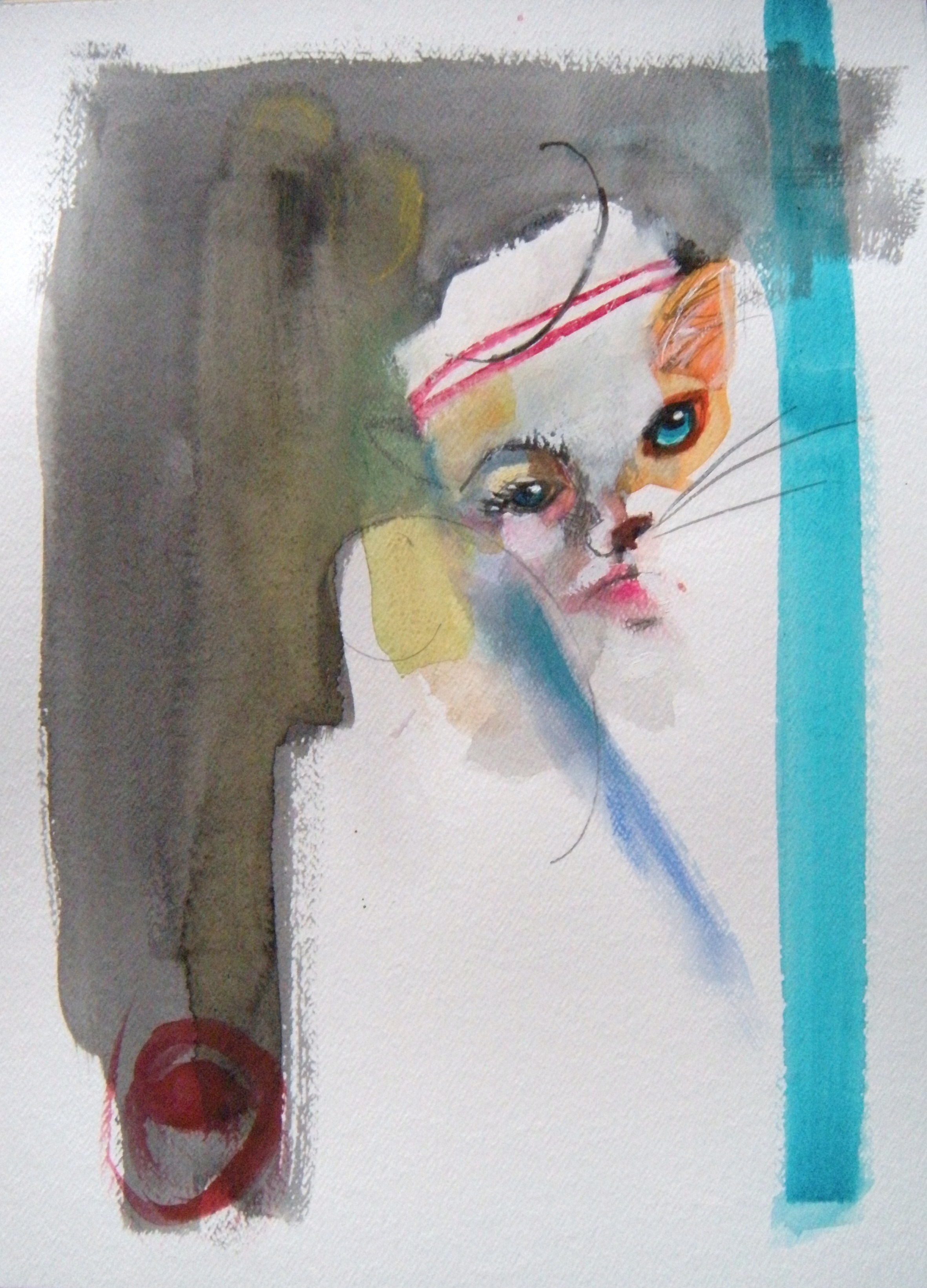
Cat Nurse II
watercolor, ink, pastel & pencil on paper 2010 by JParadisi
This is the second painting interpreting the image on a get-well card of a cat wearing a nurse hat.
Cat Nurse II
watercolor, ink, pastel & pencil on paper 2010 by JParadisi
This is the second painting interpreting the image on a get-well card of a cat wearing a nurse hat.
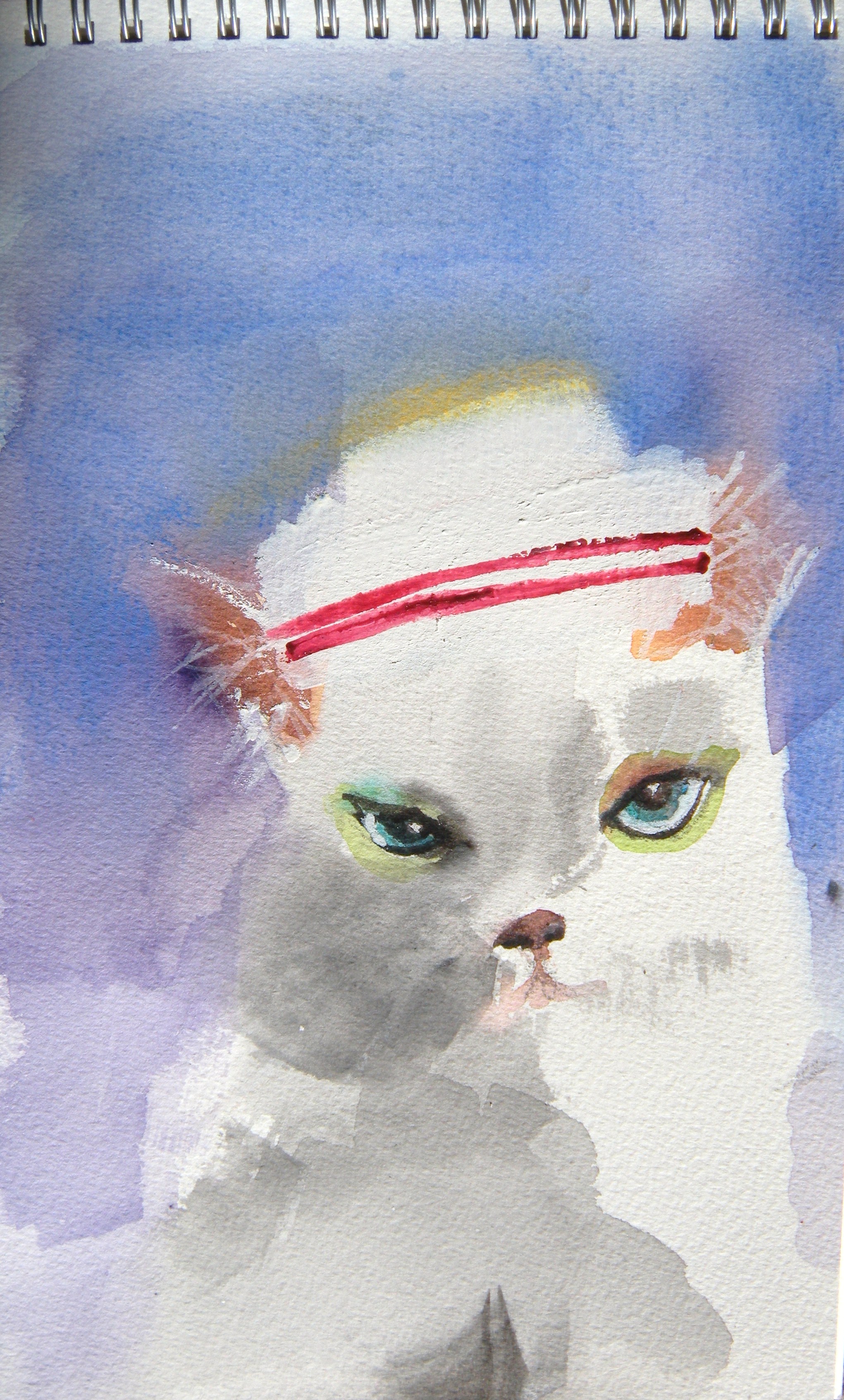
Cat Nurse 2010 by JParadisi
watercolor, ink, and pastel on paper
In a hospital gift shop I found a get well card with a photograph of a cat wearing a nurse cap. The cat looks pissed off in the photograph. Maybe the cat is angry because it’s wearing the cap, but I suspect it was photo-shopped on. Is the cat angry because the designer of the card is saying something about nurses? I don’t know. It’s a funny image designed to make the person receiving the card laugh. This is the first interpretation I painted of the card.
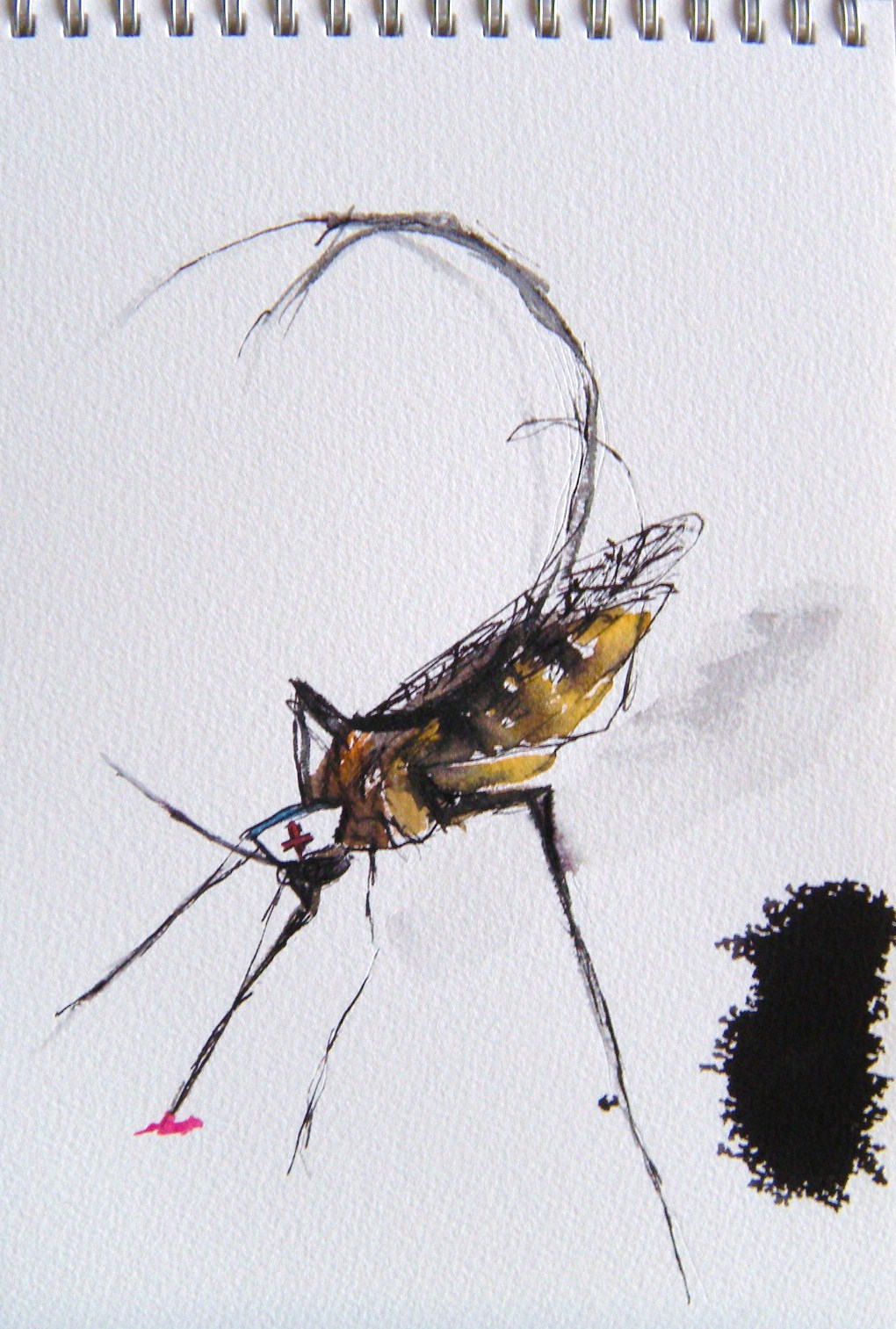
Metamorphosis (If Kafka wrote about a Nurse)
watercolor and ink on paper 2010 by JParadisi
Someone comparing a mosquito bite to a nurse drawing blood gave me a photo-shopped image of a mosquito wearing a tiny nurse cap. It is that person’s perception of a common nursing task.
The title of this blog, Die Krankenschwester (kron/ken/shwes/ter) translates to The Sick Sister. It is the German word for nurse. In this blog, I begin with the question: Has media representation of nurses affected their identity? I explore the question through posts using visual art and sometimes essays. The posts are not authoratative declarations nor draw conclusions about nurses or nursing. They’re more about art and observation than science, although Die Krankenschwester is an experiment.
In this inaugural post, I quote from the preface of Notes on Nursing: what it is, and what it is not, by Florence Nightingale:
The following notes are by no means intended as a rule of thought by which nurses can teach themselves to nurse, still less as a manual to teach nurses to nurse. They are meant simply to give hints for thought to women who have personal charge of the health of others. Every woman…has, at one time or another of her life, charge of the personal health of somebody, whether child or invalid,- in other words, every woman is a nurse.
Is every woman a nurse? Not all nurses are women.


 Die Krankenschwester